Audiovisual Poetry – Bodying Magic
Visual rhythms weaving body poetry, cross-cultural perspectives, and ecosystemic awareness into transformative art
Changing Perspectives by Water Magic
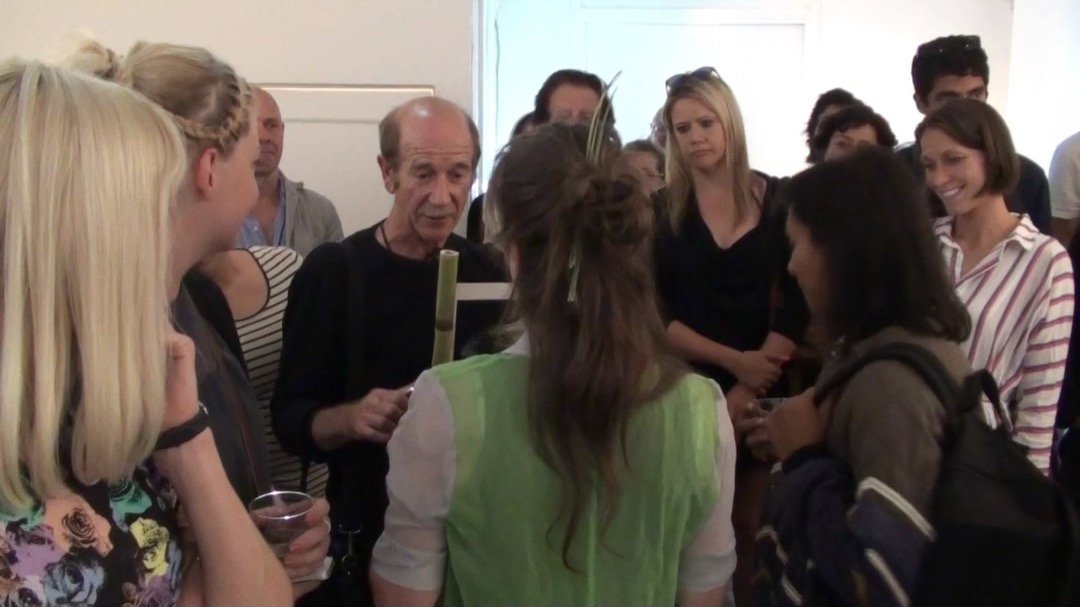
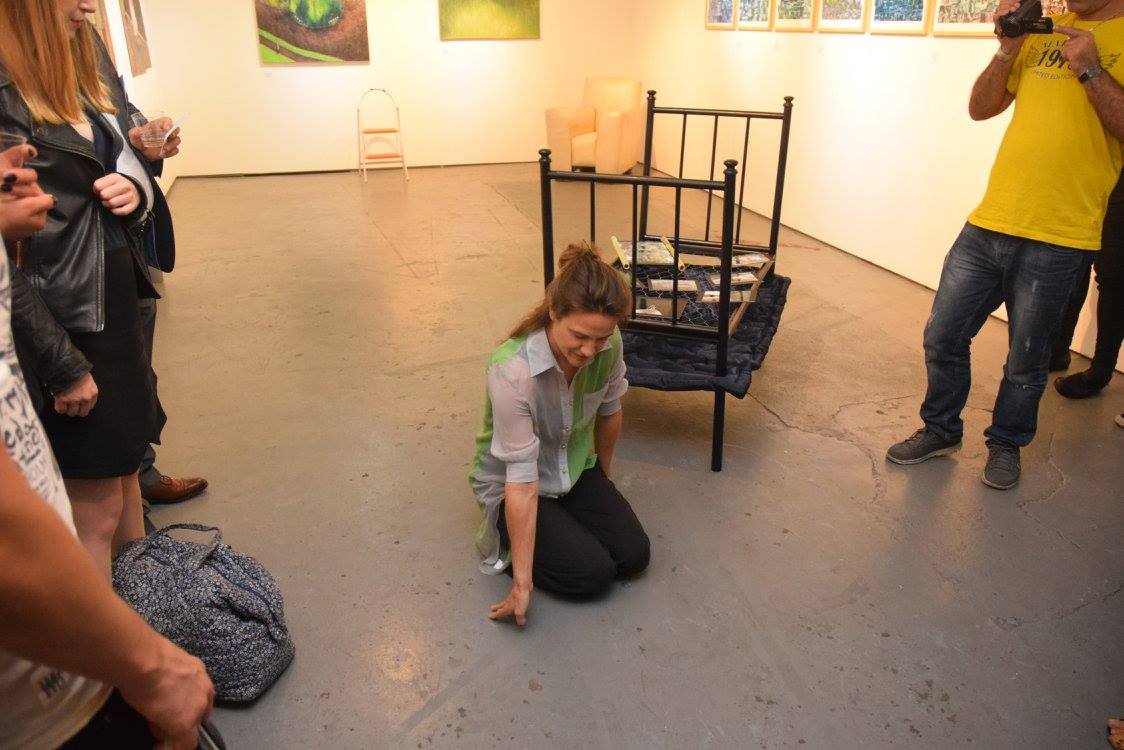
A performance about what it feels like to live and travel along the River Ivindo in North-Eastern Gabon in dugout canoes. Created for the exhibition The Stories They Told in London, it shows how the egalitarian Baka groups, as local forest dwellers, experience their diverse surroundings and appreciate the continuous story of transformative shape-shifting that is forest life.
The dugout poetry invites viewers to shift to an embedded sensing with water-forest ecologies.
The Sounds of Non-Violence
This video-poem reflects on non‑violence as a subtle, ancestral force that resonates through cultural and ecological diversity. The poem traces how such gentle and generative vibrations echo across time, linking us with the dreams of our ancestors.
The piece emerges from collaborating on the Bakhita research project as part of the We will Dance with Mountains Course with Bayo Akomalafe 2020/2021. Together with the humans and more-than-humans who formed Fire #6, we listened in with birds, trees, and body microbiomes.
The Wisdom of Water – A Sabedoria da Água
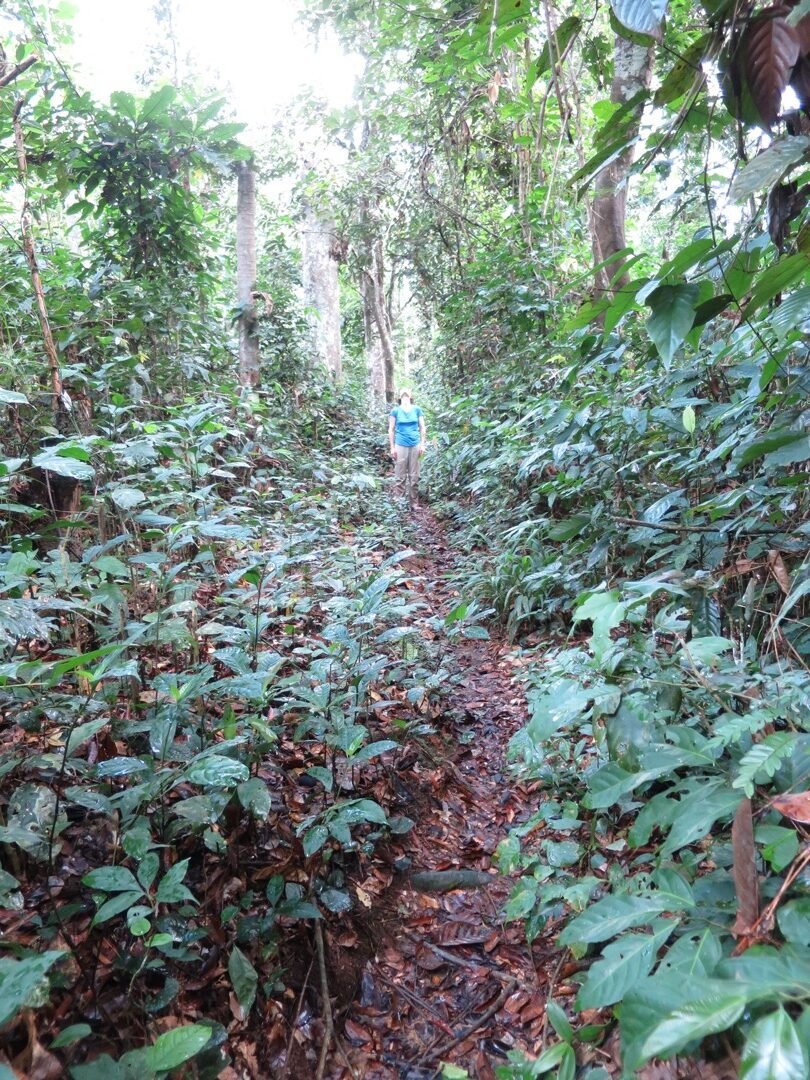
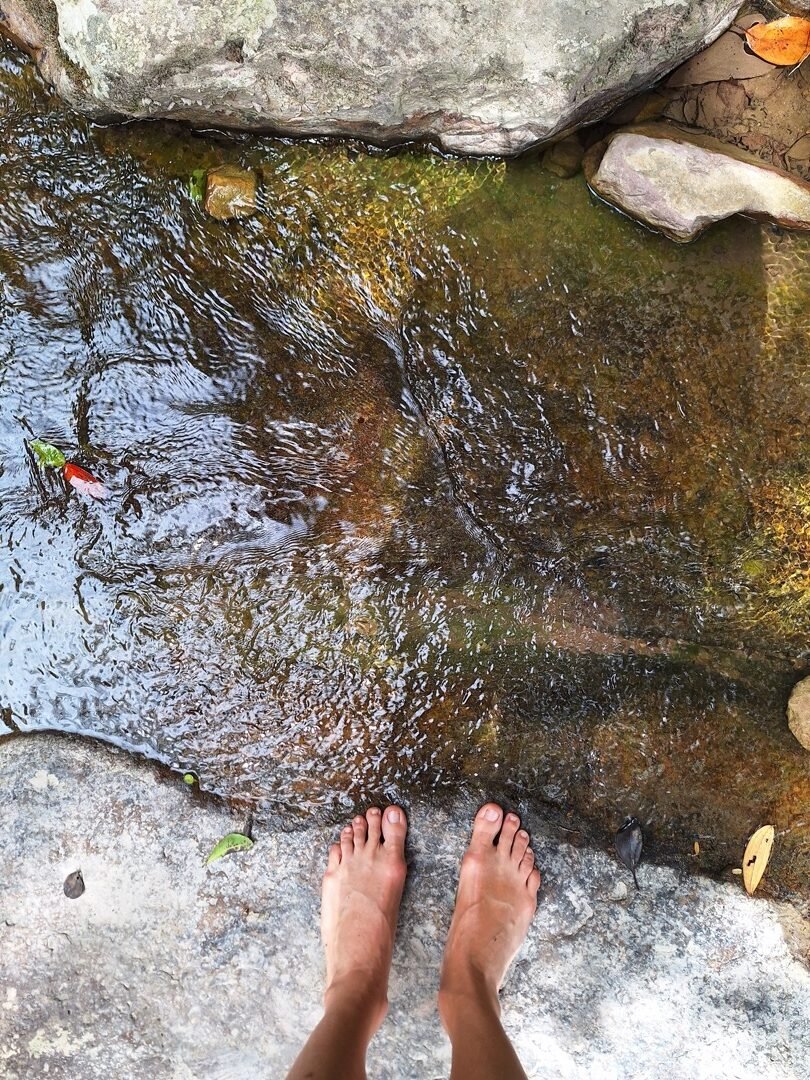
How can we playfully engage with Water and Earth? The Wisdom of Water – A Sabedoria da Agua in Portuguese – is a poetic engagement with the interstitial spaces where Water and Earth meet.
Created for the exhibition @performa_ in Curitiba (Brazil), it tells the story of my walking with Water&Earth in Bahia in Brazil during January-March 2025. This audiovisual work is part of my larger project Walking with the Elements around attuning and deeply listening-with and to the elements which make up our world.
Listening with Earth
This work comes out of a 3.5 year long creative inquiry into the notion of the ‘more-than-human’ and ‘listening with Earth’. Listening-with is a speculative and generative (eco)somatic practice for attuning to Earth and sensing our human situatedness in our bones, fascial tissues, cellular breathing, and all other nuances of our bodying.
The piece was developed as the Editorial for the Special Edition (7.2) of JER, the Journal of Embodied Research. At the scientific level, it explores how embodiment as an ecological experience can transform established academic modes of knowing and doing, by allowing a different aliveness into the inquiry.
At a personal level, during these 3.5 years, I learned more about how each land and place demand a different honouring, and at the same time offer a unique kind of joy and aliveness. I deepened my practice of listening-with and my awareness of the relation between listening and voicing — into listening until an impulse or voice emerges, from which a movement may follow.

Healing Intergenerational Hurt with the More-than
The Rhythm of Equinox 2025
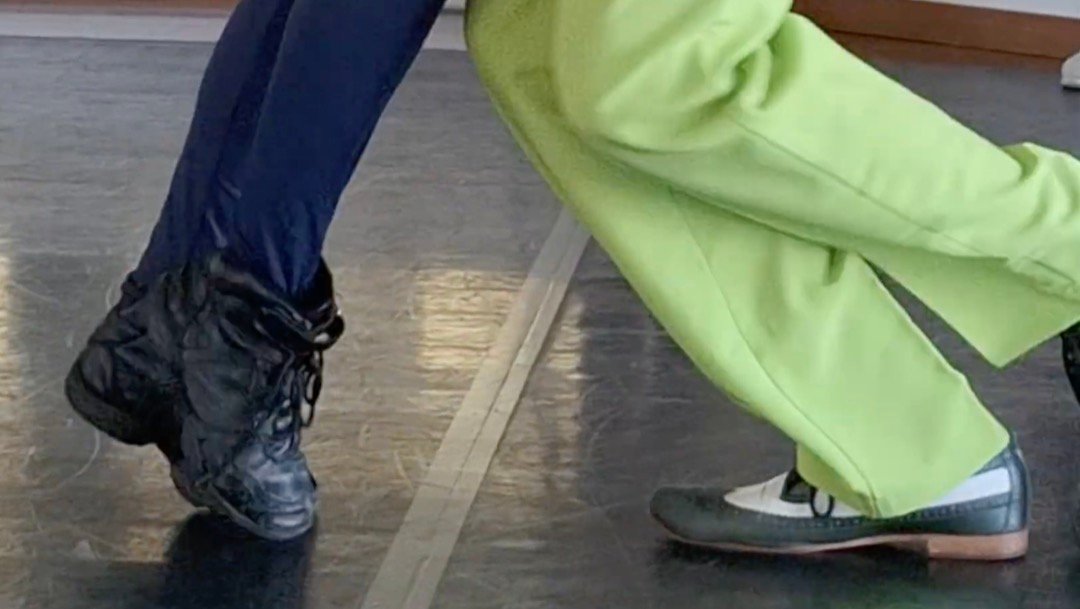
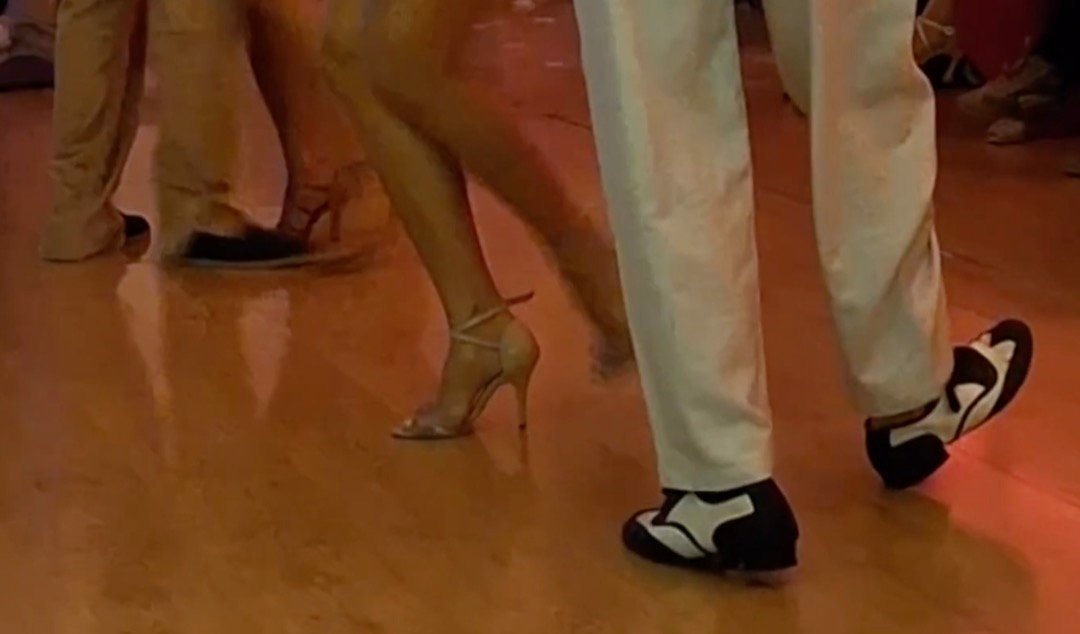
Samba-Feet take us walking and dancing into the eternally moving balance of night and day, moon and sun, ritual and daily life, and feminine and masculine – to the samba de gafieira rhythm of ‘chicki-chicki-dum’, as the rhythm is said in words.
This work is made for Equinox September 2025, a collaboration where international artists, who share walking as a common artistic practice, respond to the seasonal changes. Produced by Kel Portman.
Lichen Poetic Technology
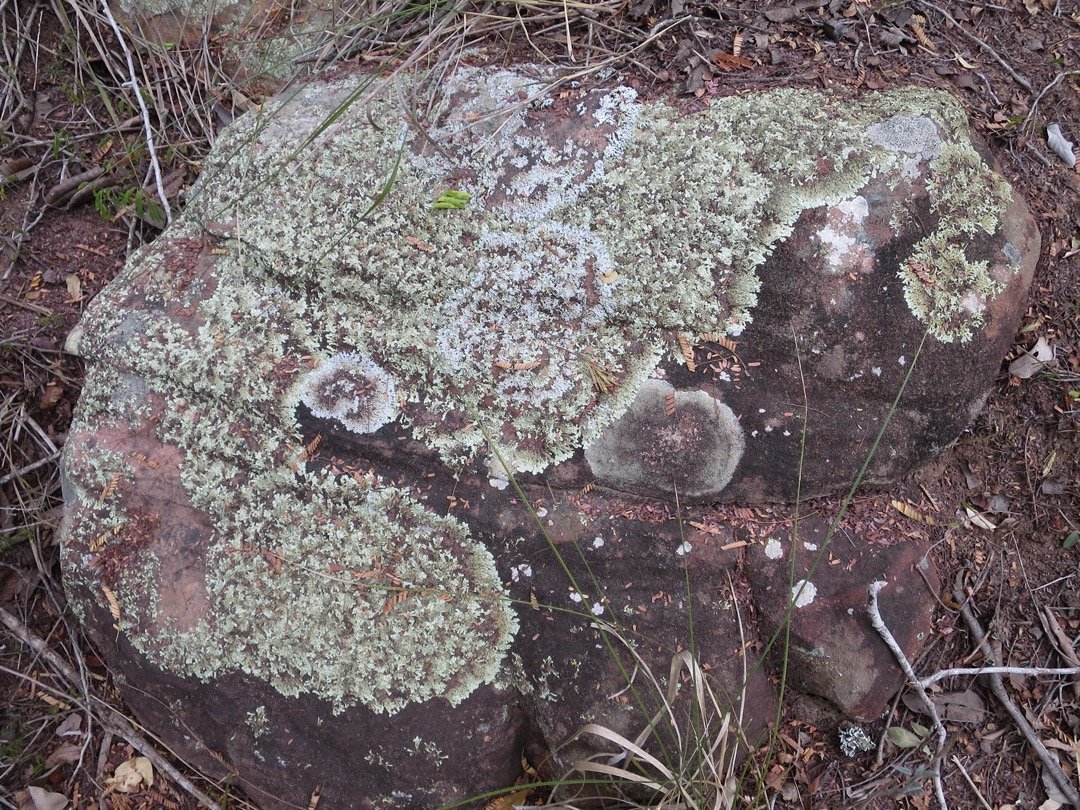
Lichen Poetic Technology - Audio
Dating a Tree – Dating a Composition
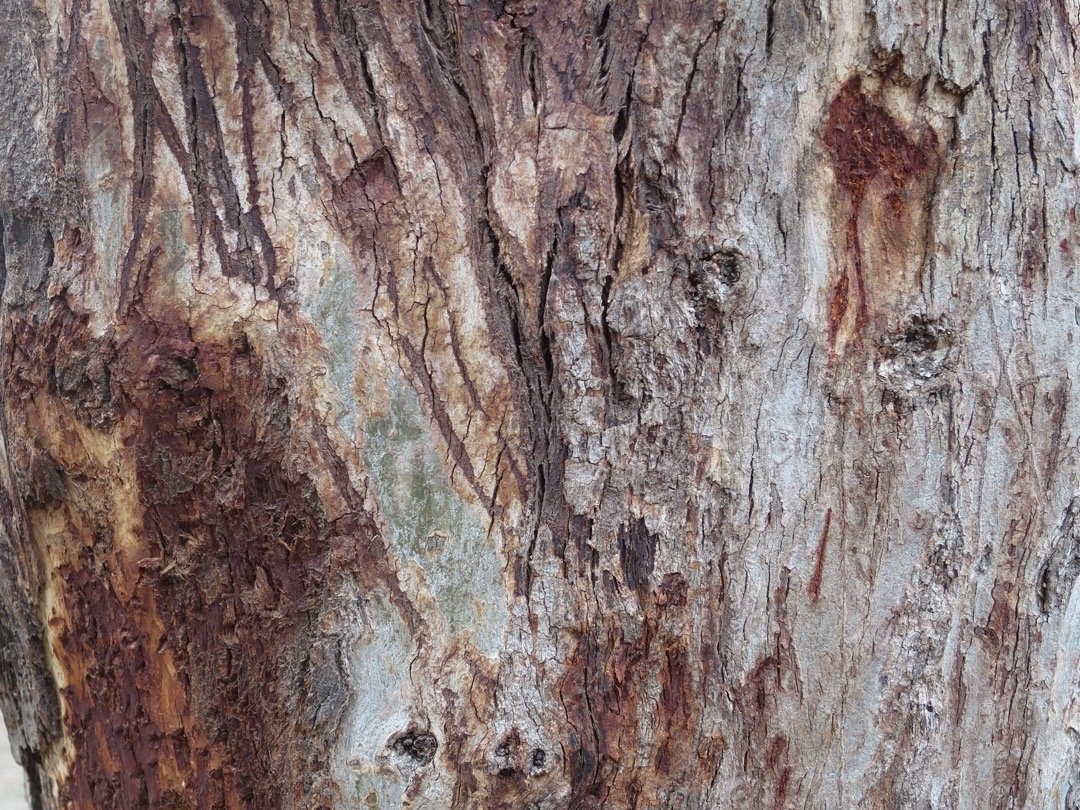
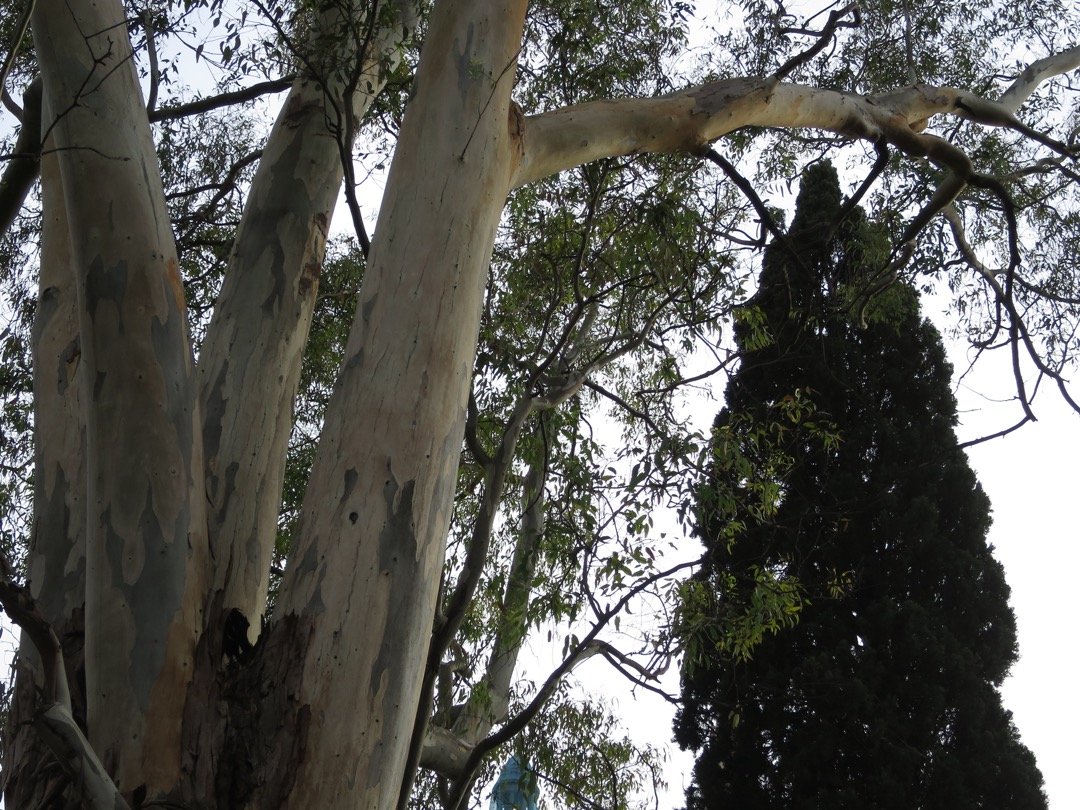
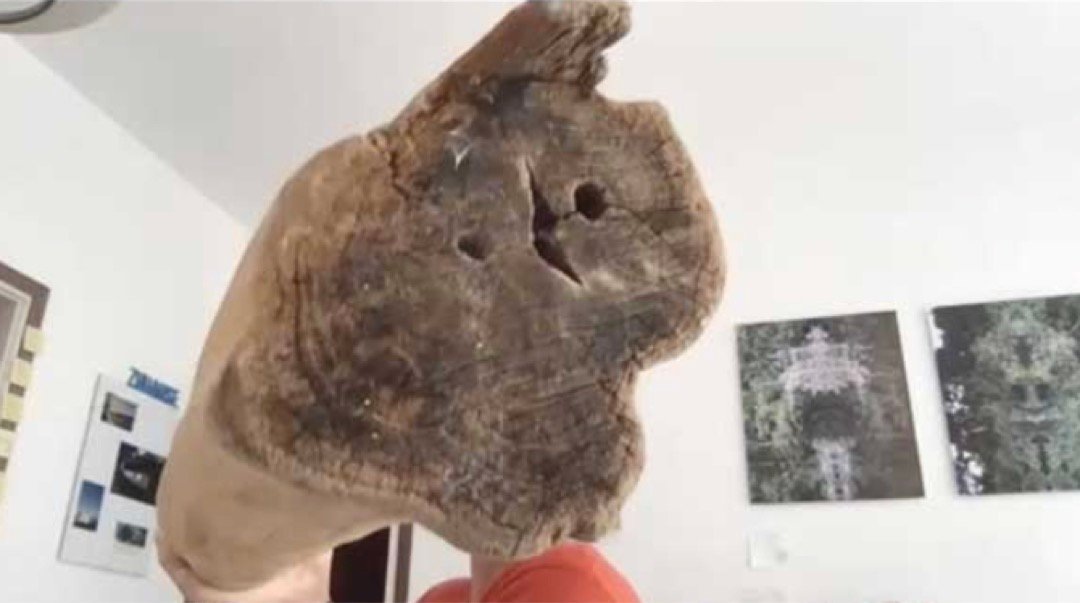
Have you ever explored human-tree relations, shared stories about engaging with tree beings, or dated a tree? Through reflecting on human personal relationships and big events like the pandemic, the piece imagines how trees help humans shape relational qualities of the future in the present.
Emerging from a collaboration for the digital exhibition How to Become a Posthuman, the video is part of speculative ideas about how the critical posthuman being might reconceive its situatedness.
Co-Editing with the More-than-Human
What or who is this “more-than-human” that people are talking about? With this video, we problematize the words and explore the question through the connection between ecology and embodiment and through different artistic disciplines and traditions of embodied research.
This process confirms that the more-than-human is many things, which invite us to think through and sense as ecologies of embodiment, the bodily felt and cognitively thought generative spaces between certainty and uncertainty, knowing and not-knowing, sensing and naming.
This video is part of my longer creative inquiry into the notion of the ‘more-than-human’, and was developed as the Editorial for the Special Edition (5.2) of JER, the Journal of Embodied Research.
Moving Choices – Dancing my PhD
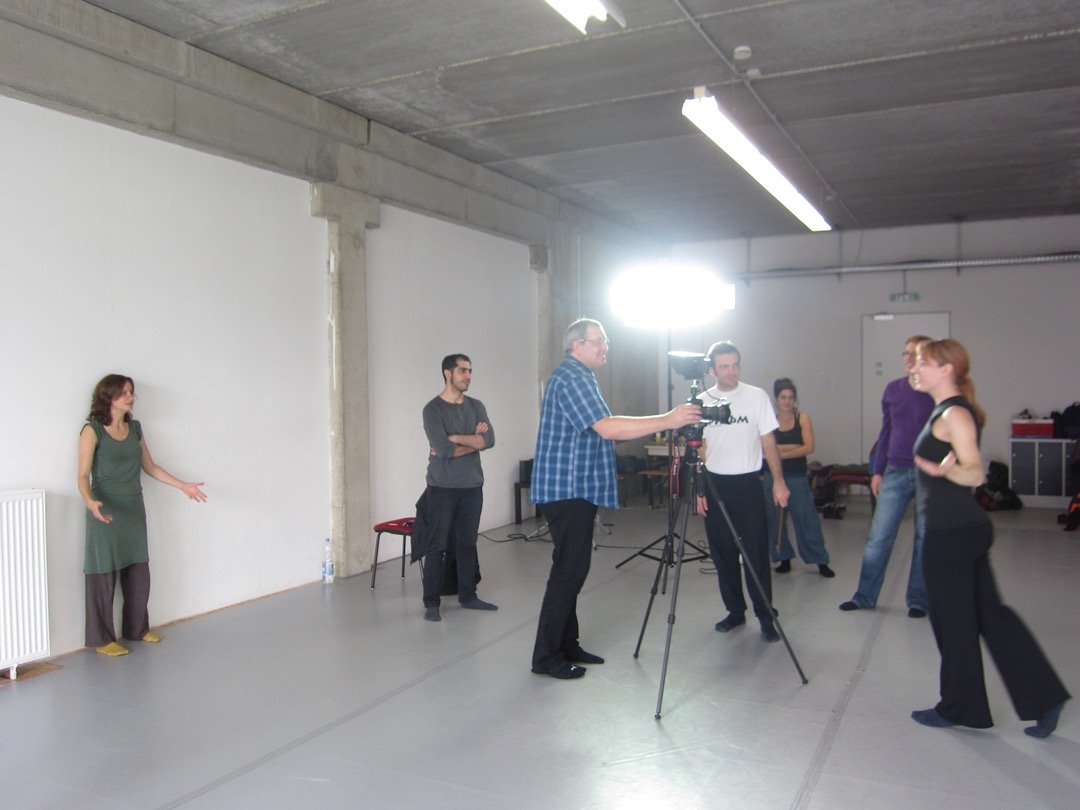
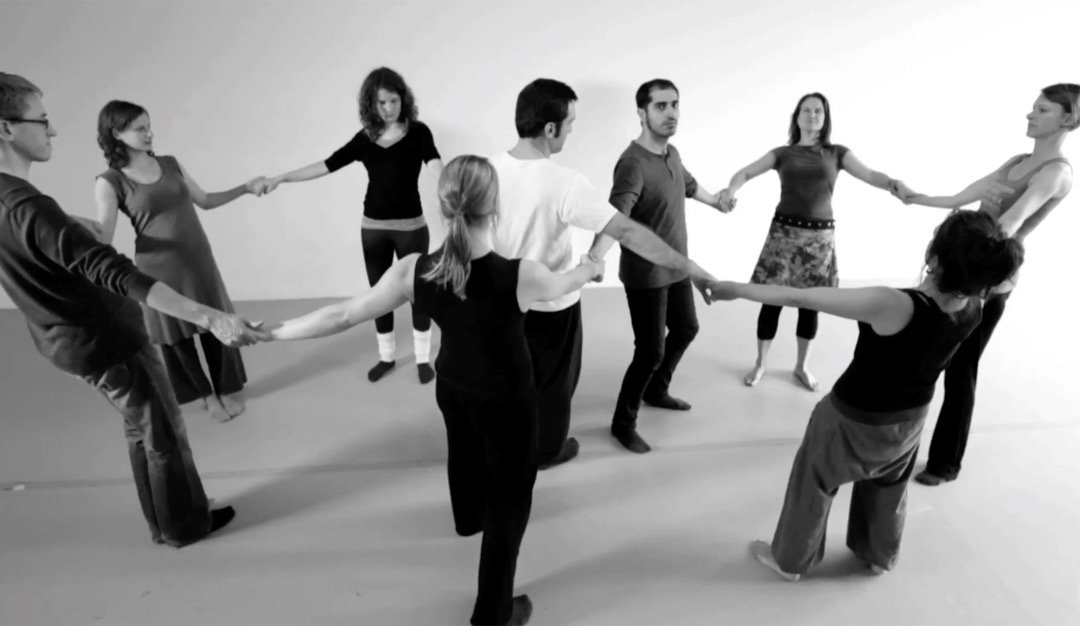
‘Moving Choices’ shows my friends and myself embodying the concept of motility – which refers to the capacity or potential to move. The video was nominated for the annual AAAS Dance the Ph.D. Contest, and we dance how human mobility can happen on a small or individual level, or as complex patterns in time and space. By focussing on the capacity to move, rather than just the observable facts of mobility, a motility analysis adds depth and understanding to mobility studies. This was a central finding of my Ph.D. in Social Anthropology at the University of Cologne in Germany.
Read more
For the Ph.D., I spent a one-year fieldwork period with the Baka, a group of hunter-foragers living in the tropical forests of Gabon in Central Africa. I was researching how and why the Baka are or are not mobile today.
As the Baka wear the same clothes we do, I realised that doing away with any costumes or props and donning our favourite everyday-wear was the most appropriate and respectful way of depicting my research context in the film. Simply dancing in a studio I had hired for the occasion and filming in black and white equally acknowledge this fact.
We hope you enjoy our moving choices.
If you would like to know more about my PhD work with the Baka in Gabon, please have a look here: http://kups.ub.uni-koeln.de/5238/