
Tensional Responsiveness
– a shared inquiry into systems sensing and relational intelligence
Something is shifting in the world. You can feel it — in the news, in your body, in the quality of conversations around you. The old frameworks are fraying. The old tools are not enough.
And yet your body already knows something different is possible. Not as an idea. As a felt capacity — relational, ancestral, ecosystemic — that most of us have been trained out of noticing.
This four-session course, starting October 21, is an invitation into collective relational knowing.
What we’ll explore
Drawing on many years of anthropological inquiry, fascia research, somatic practice, and the living example of the Baka egalitarian foragers of north-eastern Gabon — we will explore what it means to sense and move differently. To relate differently. To organise, work, and make decisions from a different quality of bodily presence.
This is not a course about information. It is a course about felt experience. Each session moves between input, somatic practice, and conversation in small groups and peer learning. Between sessions, you’ll receive prompts to carry in your body through the week as embodied and alive.
The work is rooted in Tensional Responsiveness — the capacity to sense tension as connection rather than conflict, to respond to what you and the group need in real time, to stay fully yourself while remaining exquisitely attuned to others. It is the oldest human capacity there is. And it is exactly what this moment needs.
The session titles indicate how our shared inquiry will move: Bodying; Independence within Interdependence; The Sound of Relating; and Opening into Worlds.
What is your body telling you that your mind hasn’t heard yet?
Read more
What would it feel like to be fully yourself and fully attuned to others — at the same time?
Read more
The egalitarian Baka of Gabon continue to organise in a very special way — without people telling each other what to do and avoiding hierarchy. We investigate what this social capacity feels like in our bodies (without mistaking separation for strength), and what becomes possible when we invite institutional plasticity.
What happens in a group when power stops accumulating and starts circulating?
Read more
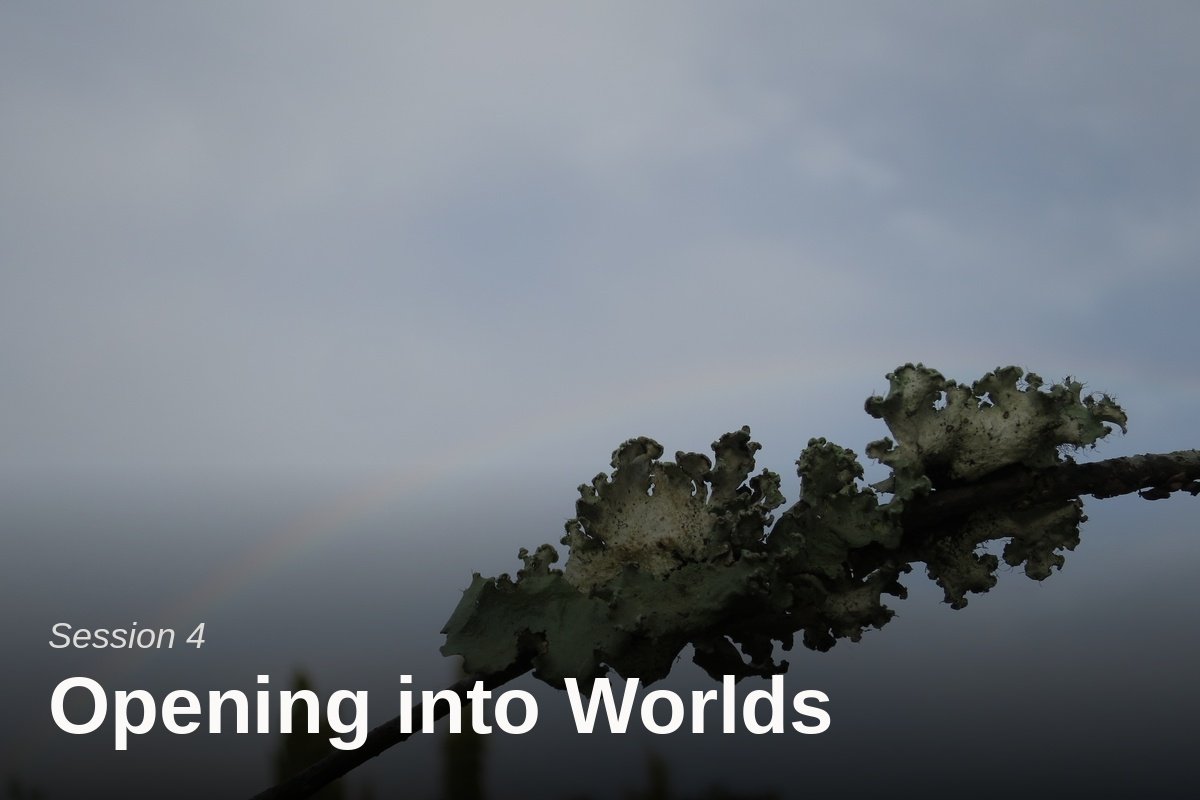
What becomes possible when you open rather than cut?
Read more
Who this is for
This course is for people who sense that our current approaches to change, leadership, health, ecological crisis, and other topics, are no longer enough; that our personal and collective responses to the complexity and beauty of the world we live in, are failing us.
You may already be drawn to somatic practice, embodied learning, systems thinking, or social justice. You don’t need prior knowledge of fascia or anthropology — only a willingness to ask questions and notice what your body already knows.
You may leave with a novel, shared capacity for responding to complexity and beauty.
About Doerte
Course Details
Dates: October 21, November 4, and 18, December 2
Start time: 20h CET (find your time)
Session duration: 90 minutes
Payment Options
The course offers a Sliding Scale: Supported, Standard, and Sponsor. Please choose the option below that best meets your financial situation. If you are in a position of relative economic advantage, please consider supporting other participants. Early Bird (in brackets) applies until October 14th.
Supported: € 80 (€ 65)
Regular: € 120 (€ 100)
Sponsor: € 250 (€ 230)
Subsidised places are available. Please write to me, if you are in need of economic support to attend, or with any other questions: doerte.weig@gmail.com
FAQ:
- What do I need to participate? — Just yourself, a quiet space, comfortable clothes, and a willingness to move and sense gently.
- What language will the course be in? — English, with short, momentary translations to German or Spanish possible.
- Will sessions be recorded? — The input and practice parts will be recorded.
- What if I can’t attend a session live? — You will have the recording to participate at a later stage.
- How do subsidised places work? —write to Doerte directly at doerte.weig@gmail.com